

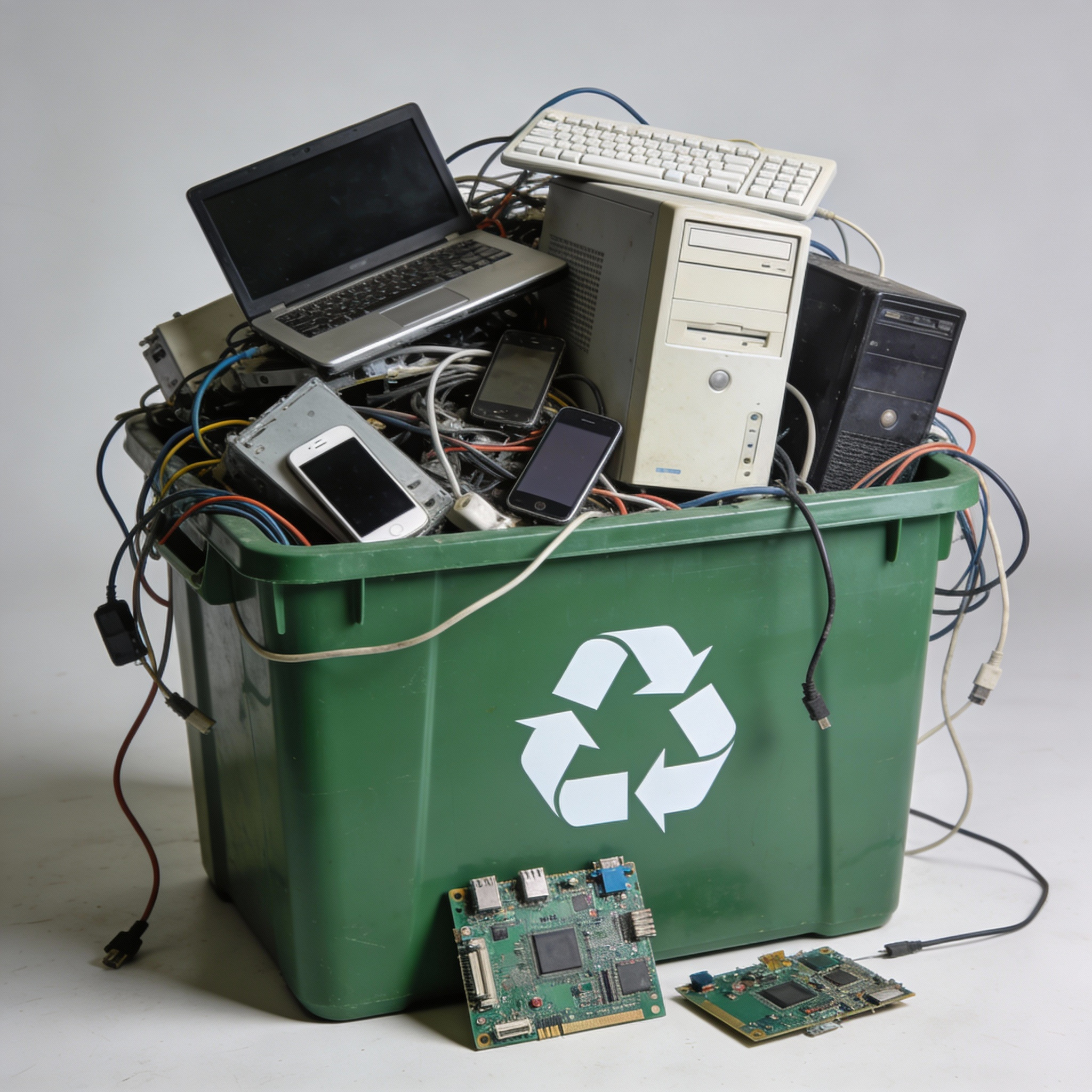
Electronic waste, or e‑waste, refers to discarded electrical and electronic equipment and their components. It is one of the fastest-growing waste streams globally and poses significant environmental and health risks if mismanaged. Basic definition Electronic waste includes any device that needs electricity or a battery to operate and that has been discarded by its owner without intent to reuse. This covers both household and business equipment such as computers, televisions, mobile phones, printers, and large appliances like refrigerators and washing machines. Typical items in e‑waste Common e‑waste items are: computers and laptops, monitors and TVs, mobile phones, tablets, printers and copiers, audio/video equipment, and many small gadgets with circuitry. Large household appliances (fridges, air conditioners, washing machines) and office/medical electronics (servers, imaging equipment, dialysis machines) are also major contributors. Composition and hazards E‑waste contains valuable materials (copper, aluminum, gold, silver) that can be recovered through proper recycling. At the same time it often contains hazardous substances such as lead, mercury, cadmium, hexavalent chromium, brominated flame retardants, and PVC, which can harm human health and the environment if released. Environmental and health impact Improper handling of e‑waste (open burning, acid leaching, crude dismantling, dumping) can release hundreds of toxic chemicals to air, soil, and water. Exposure, especially for children and informal workers, is linked to neurotoxicity, developmental problems, respiratory issues, cancers, and damage to kidneys, liver, and reproductive systems. Key point for a short description In a single concise line: Electronic waste (e‑waste) is discarded electrical and electronic equipment and their parts—such as computers, phones, TVs, and appliances—that can release toxic substances if not safely collected, recycled, or disposed of.

Have a question? Ask here!