

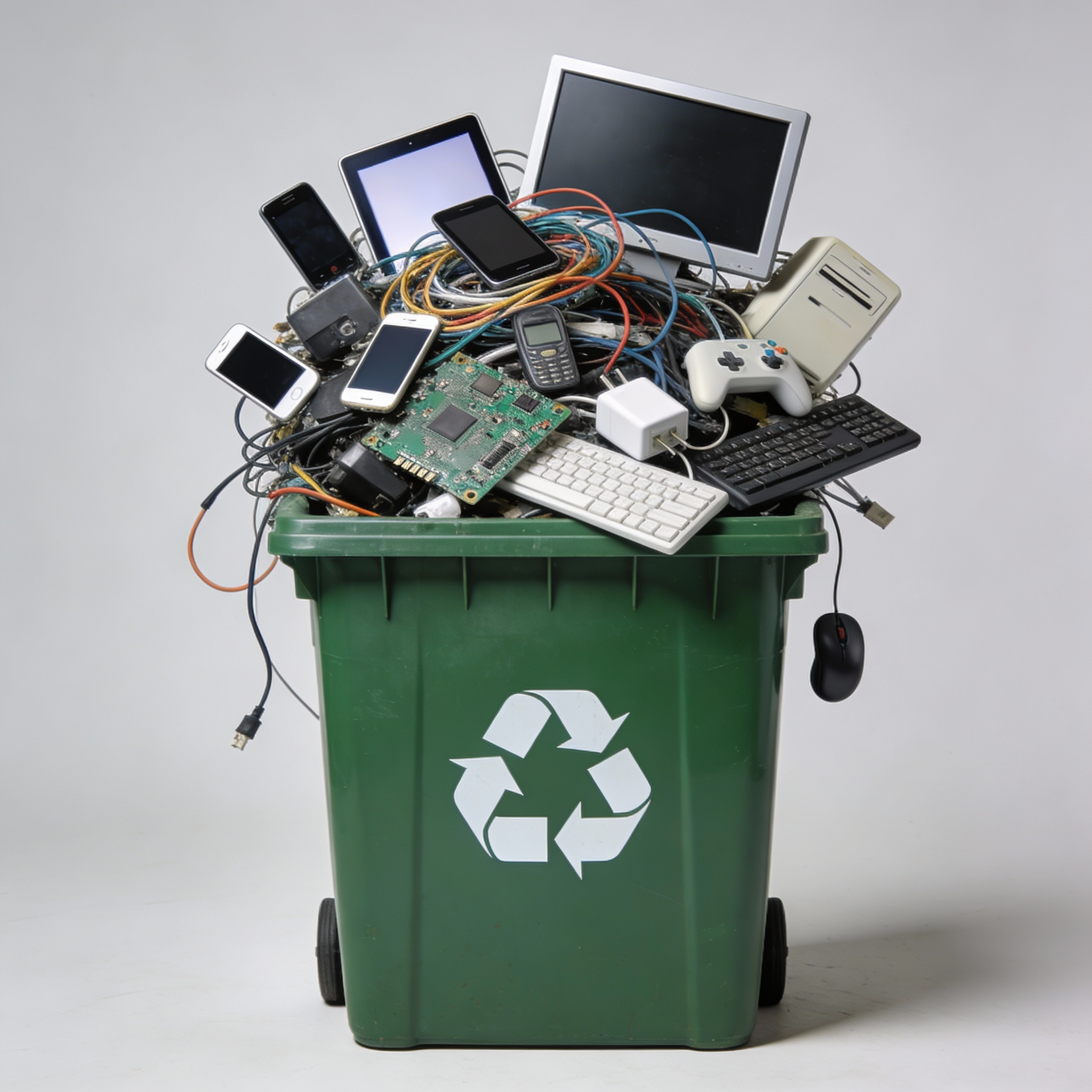
Electronic waste, or e-waste, consists of discarded electrical and electronic devices like computers, phones, TVs, and appliances that are no longer wanted or functional. These items contain valuable materials such as metals and plastics alongside hazardous substances like lead, mercury, and brominated flame retardants. Key Characteristics E-waste grows rapidly due to short product lifecycles and constant tech upgrades, making it one of the fastest-increasing waste streams globally. It includes both large items (refrigerators, washing machines) and small ones (batteries, circuit boards), often categorized into household appliances, IT equipment, consumer electronics, and medical devices. Common Examples Computers, monitors, and peripherals with circuit boards rich in copper and gold. Mobile phones and batteries leaking toxic chemicals if not recycled properly. Televisions and lamps containing lead glass or mercury. Hazards and Management Improper handling like open burning or landfilling releases toxins into air, soil, and water, posing health risks. Proper recycling recovers 95% of materials through dismantling, shredding, and separation, following extended producer responsibility rules in places like India and the EU.

Have a question? Ask here!