

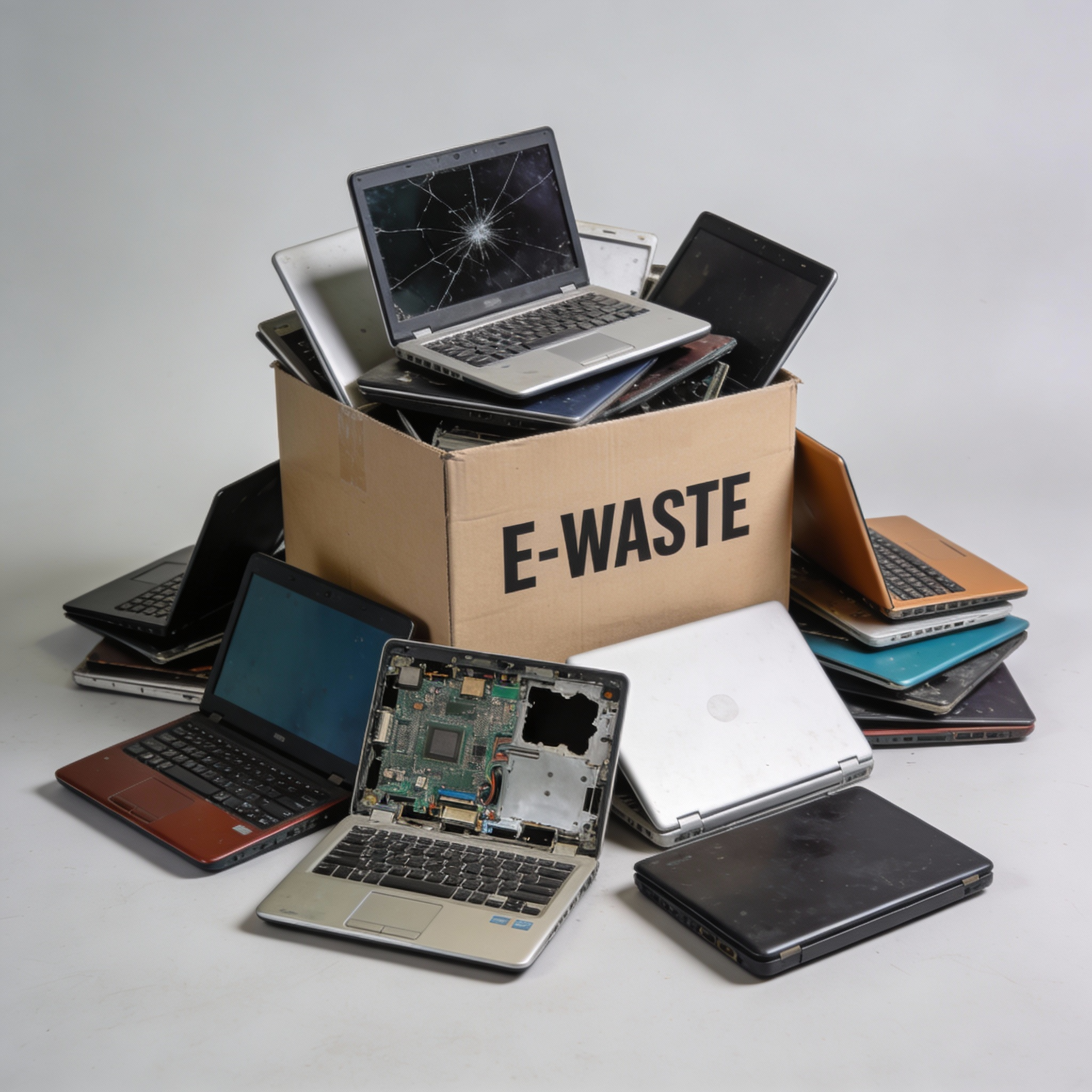
Laptop waste refers to discarded laptops classified as electronic waste due to obsolescence, damage, or end-of-life. These devices contain hazardous materials like lead in solder, cadmium in batteries, and brominated flame retardants in plastics, alongside recoverable metals such as copper, gold, and aluminum. Key Characteristics Laptop e-waste typically features cracked screens, worn keyboards, swollen lithium-ion batteries, and exposed circuit boards with components like CPUs and RAM. Average weight ranges from 1-3 kg per unit, with high concentrations of toxic substances that leach into soil and water if improperly dumped. Hazards and Composition Hazardous elements include mercury in backlights, hexavalent chromium in coatings, and PVC insulation, posing risks of neurotoxicity, kidney damage, and cancer upon exposure. Valuable parts like hard drives and processors enable recycling recovery rates up to 90% when processed formally. Recycling Notes Proper handling involves dismantling for material separation, shredding non-hazardous plastics, and smelting metals, reducing environmental impact compared to informal burning or landfilling. (see the generated image above) Here's a visual example of laptop waste in a labeled box.

Have a question? Ask here!