

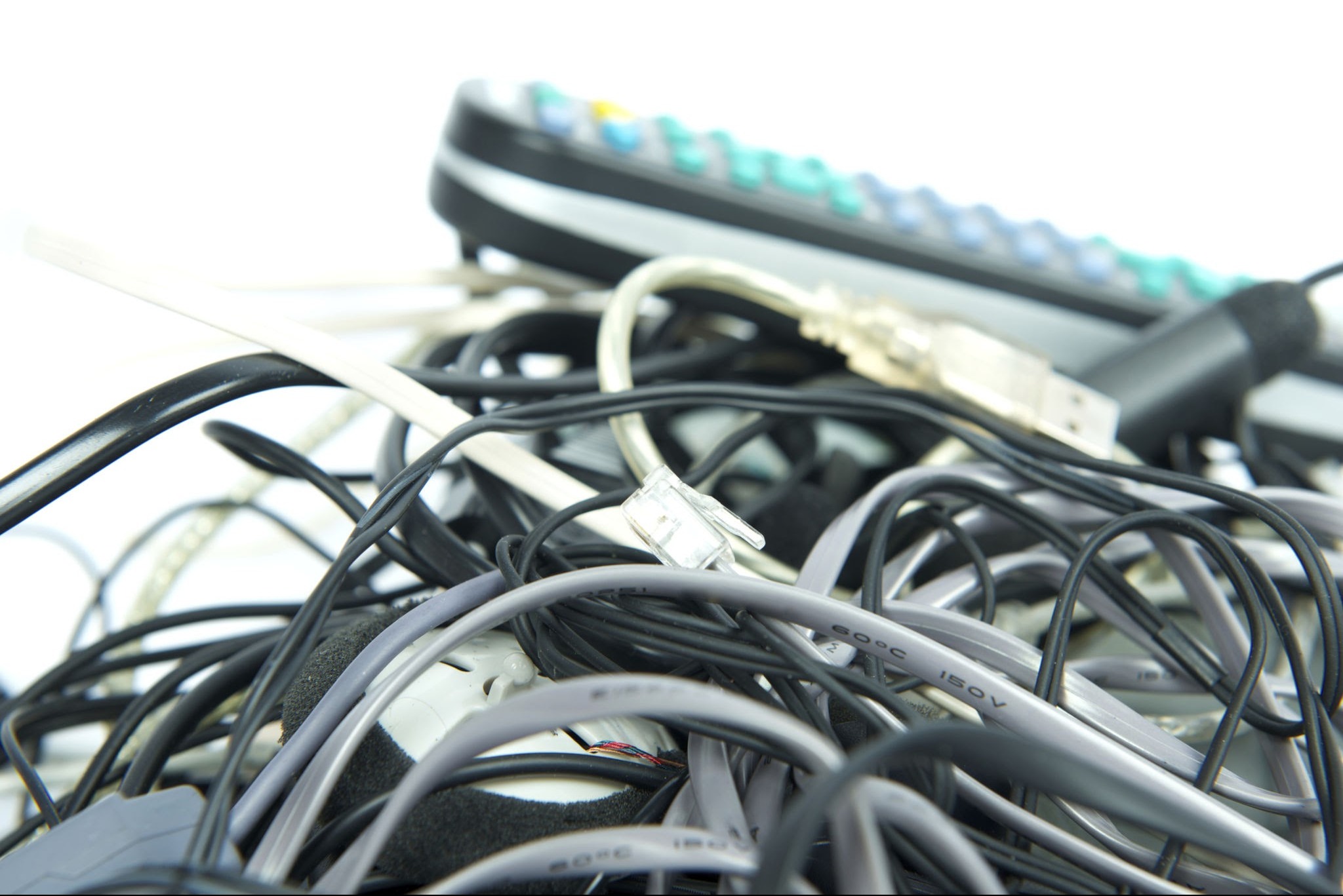
USB cables scrap includes old, damaged, cut, outdated, or unwanted USB-A, USB-B, Micro-USB, USB-C, Lightning, and other charging or data cables. These cables are treated as electronic scrap because they contain copper or aluminium conductors, plastic insulation, metal connectors, and small shielding materials. Working cables can be reused, donated, or sold as second-hand accessories. Broken or obsolete cables should be separated from regular household waste and sent to an e-waste recycler or scrap dealer. Materials Found in USB Cable Scrap Fine copper wires used for power and data transmission. Aluminium or metal shielding in some cable types. PVC, rubber, nylon, or other plastic insulation. USB-A, USB-B, Micro-USB, USB-C, or Lightning connectors. Nickel-plated or other metal-coated connector surfaces. Small amounts of solder and protective filler material. Outer rubber boots, strain reliefs, and plastic plugs. Types of USB Cable Scrap USB-A to Micro-USB cables. USB-A to USB-C cables. USB-C to USB-C cables. USB printer and scanner cables. Mobile phone charging cables. Tablet and camera data cables. Hard-drive and computer USB cables. Mixed charging cables and electronic wire scrap. USB Cable Scrap Recycling Process Cables are sorted by type, condition, and thickness. Working cables are separated for reuse or resale. Chargers, adapters, and attached electronic devices are removed. Cables are bundled and weighed before processing. Insulation is mechanically removed where economical. Copper, aluminium, connector metals, and plastic are separated for recycling. USB cable scrap usually has a lower value than heavy copper wire because the conductors are thin and covered with insulation. The final rate depends on copper content, cable quality, cleanliness, quantity, and local market conditions. Safety Precautions Do not burn USB cables to recover copper. Do not use cables with exposed wires, cuts, or damaged connectors. Keep cables away from children and moisture. Separate cables containing attached batteries or electronic parts. Store large quantities in dry bundles before sending them to a recycler.

Have a question? Ask here!